He has booked a romantic bed-and-breakfast. A large stone, maybe a carat, could earn him $100, he says, enough to let him dream about going back to school, after dropping out at 12 to go to the mines-the only work available in his small village. Rodriguez has heard about how diamonds fuel distant conflicts, about the miserable conditions of the miners who wrest the stones from the earth, and he worries. Mining work is grueling, and he is plagued by backaches, but that is nothing compared with the pain of seeing his family go hungry. Hundreds of miners die every year in tunnel collapses that are seldom reported because they happen so often. The only thing that troubles him is the issue of the ring. His father is blind; his mother abandoned them several years ago. How does that help us? None of the roads are paved, not even the airport runway. ” Many parents choose to send their teenagers to the mines instead. He knows of at least a dozen other boys from his community who have been forced to work in the mines to survive. There is no money left for school. Instead of blessings, our diamonds bring us nothing but misfortune. But more than 10 years later, while the process did reduce the number of conflict diamonds on the market, it remains riddled with loopholes, unable to stop many diamonds mined in war zones or under other egregious circumstances from being sold in international markets. “We have so much wealth, yet we stay so poor. Teachers at government schools demand payment from students to supplement their meager salaries. “We still won’t be able to go to school.
A U.N.87 million to $5.8 million a year through the taxation of and illicit trade in diamonds.K.
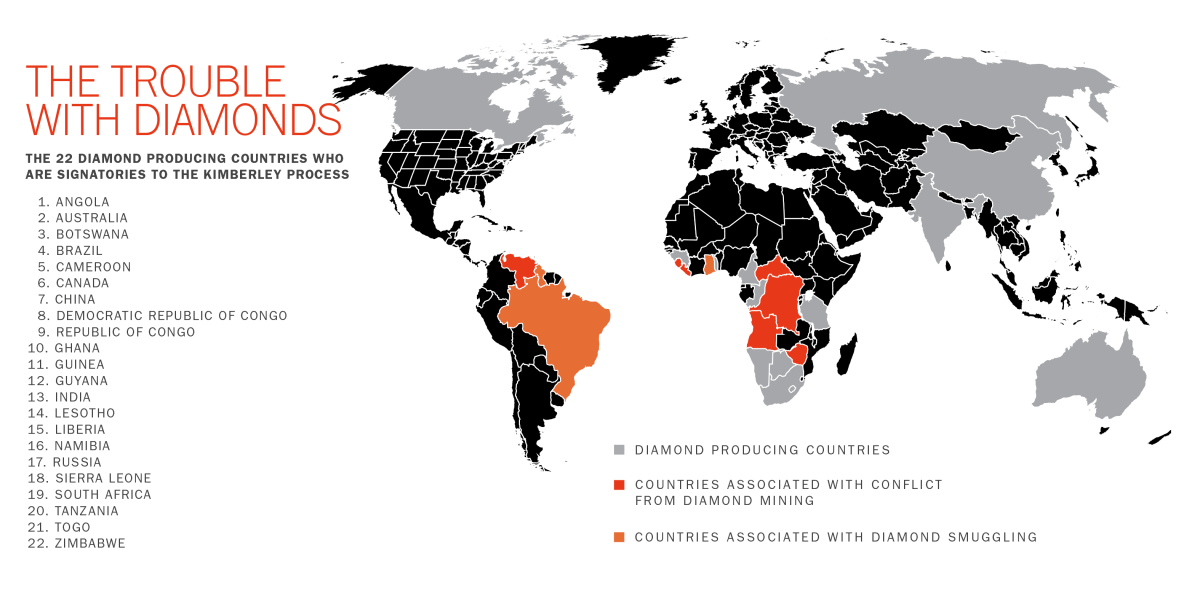
 In an age of supply-chain transparency, when a $4 latte can come with an explanation of where the coffee was grown and how, even luxury goods like diamonds are under pressure to prove that they can be sustainable. By 2003, 52 governments, as well as international advocacy groups, had ratified the scheme, establishing a system of diamond “passports” issued from the country of origin that would accompany every shipment of rough diamonds around the world. Unfair labor practices and human-rights abuses don’t disqualify diamonds under the protocol, while the definition of conflict is so narrow as to exclude many instances of what consumers would, using common sense, think of as a conflict diamond. Countries that could not prove that their diamonds were conflict-free could be suspended from the international diamond trade. A U.N.87 million to $5.8 million a year through the taxation of and illicit trade in diamonds.K. “The fact that CAR diamonds are making it to international markets is a clear demonstration that the Kimberley Process on its own is not going to be able to deal with this kind of problem.” (Representatives of the Congolese body in charge of issuing Kimberley Process certificates deny that CAR diamonds are being laundered through Congo, but mining-ministry officials admit that it is all but impossible to police the country’s 1,085-mile [1,746 km] border with the Central African Republic.) But the hard truth is that years after the term blood diamond breached the public consciousness, there is almost no way to know for sure that you’re buying a diamond without blood on it.
Many countries, industry leaders and international organizations-including the U.S. (One reason: any changes to the criteria must be made by consensus. They’ve made little progress. Many countries, including Russia, China and Zimbabwe, have resisted inserting human-rights language that might threaten national interests.) They are instead taking it upon themselves to ensure the integrity of the diamond supply chain and assuage consumer doubts.
Tiffany & Co. “Why shouldn’t we be able to trace a much more valuable and more emotionally laden product? “They want a guarantee that it is ethical. They want to know that the communities have benefited from the diamonds they are mining. They want to know about environmental impact. Fine-jewelry sales in the U.S.9% from 2004 to 2013, even as other luxury items, like fine wines and electronics, have gone up by more than 10%.S. in 2011 with a commitment to responsible sourcing. They want to know about labor practices.
None are paid for the labor; they work only for the opportunity to find diamonds.
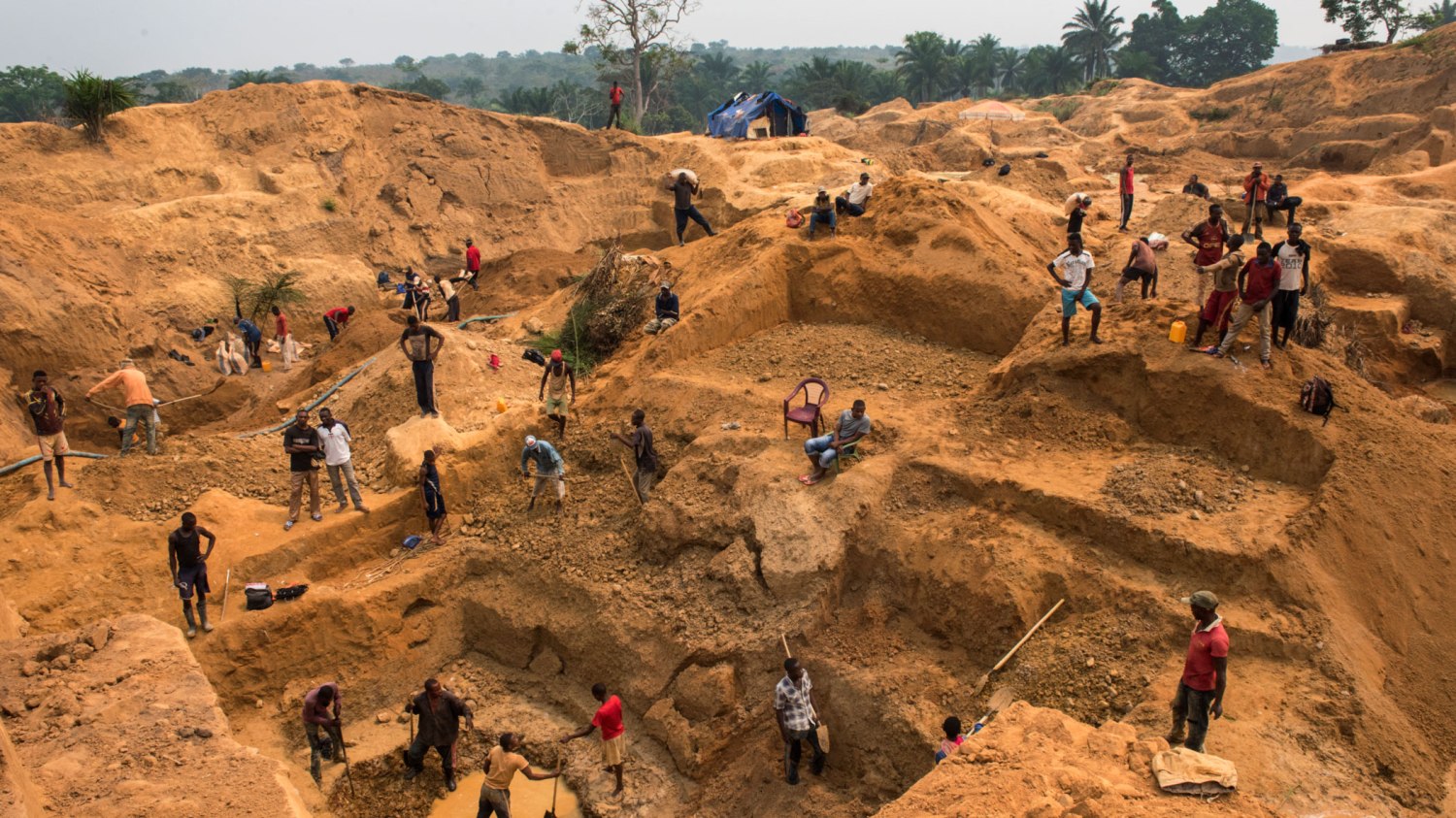
That kind of supply-chain management takes significant effort and trust, because even experts can’t tell the origins of a diamond simply by looking at it. The overseer folds it into a piece of paper torn from a cigarette pack and puts it in his pocket. Kindamba has no idea where the diamonds come from. Kindamba notes down the seller’s name, the price he paid and the total carat weight for the whole packet-4.5-in a small notebook. Dirt to expose the diamond-bearing gravel below. None are paid for the labor; they work only for the opportunity to find diamonds. Eventually they come to an agreement on a price: $200. That find will be split between the owner of the mine site, who gets 70% of the value, and the 10 members of the sluicing team, who have been working since 9 a.m. and will continue until the sun sets around 6 p.m. The day’s findings will be collected. “There are thousands of mines,” he says with a laugh. But those differences disappear as a diamond moves up the value chain. It’s worth maybe $10, he says. Sold to an itinerant buyer. One gives an excited yelp, fishes out a sliver of diamond the size of a peppercorn and hands it to an overseer sitting in the shade of a striped umbrella. “It’s impossible to keep track.” Knee-deep in water pumped from the nearby river, three men sluice pans of gravel through small sieves. They have spent four months shoveling away 50 feet (15 m) of rock.
Buy Used Diamonds
Diamond-industry experts like to say a packet of diamonds will change hands on average eight to 10 times between the country of export and its final destination. Others source only from countries with good human-rights records.
Buy Diamonds Las Vegas
It’s a delicate balancing act. A boycott “will not change diamonds of misfortune into diamonds of joy overnight,” he says. The way to better conditions in Congo is to help us better our system so that the resources generated by Congo can profit Congo.” On the one hand, companies need to understand enough about their supply chains to assure customers that child-labor issues, environmental degradation or human-rights abuses do not taint their jewelry. But while the easiest way to do that is by simply boycotting certain countries, abstaining won’t make those problems disappear.25 a day-things could actually get worse.
 Organizing miners into cooperatives is a key step in the process, much as it was for turning exploited coffee farmers into partners in fair trade. Not only can cooperatives pool resources for better mining equipment, they also can share knowledge and set prices according to global markets, rather than on the basis of what local buyers are offering. Responsible jewelers should know every step in the path from mine to market. Governments in both countries have a solid record of working with both the industrial mining industry and artisanal miners to enforce strong labor and environmental standards. “We need to do something so that all these children have an opportunity to be educated, so they won’t be poor, so they can do something with their lives. But hundreds more children in his village are still at risk. Asking questions can go a long way.
Buy Diamonds In Thailand 2017
Consumers who care can trace the fish on their plate back to the patch of sea it was taken from. But the lineage of one of the most valuable products that many consumers will ever buy in their lifetime remains shrouded in uncertainty, and too often the people who do the arduous work of digging those precious stones from the earth are the ones who benefit the least. They can choose fair-trade apparel that benefits the cotton farmers. Seamstresses who produced their clothing.



 He has booked a romantic bed-and-breakfast. A large stone, maybe a carat, could earn him $100, he says, enough to let him dream about going back to school, after dropping out at 12 to go to the mines-the only work available in his small village. None of the roads are paved, not even the airport runway. Hundreds of miners die every year in tunnel collapses that are seldom reported because they happen so often. The only thing that troubles him is the issue of the ring. Rodriguez has heard about how diamonds fuel distant conflicts, about the miserable conditions of the miners who wrest the stones from the earth, and he worries. Teachers at government schools demand payment from students to supplement their meager salaries. His father is blind; his mother abandoned them several years ago. There is no money left for school.” He knows of at least a dozen other boys from his community who have been forced to work in the mines to survive. Mining work is grueling, and he is plagued by backaches,
  But more than 10 years later, while the process did reduce the number of conflict diamonds on the market, it remains riddled with loopholes, unable to stop many diamonds mined in war zones or under other egregious circumstances from being sold in international markets. ” Instead of blessings, our diamonds bring us nothing but misfortune. “We have so much wealth, yet we stay so poor. How does that help us? “We still won’t be able to go to school.
 By 2003, 52 governments, as well as international advocacy groups, had ratified the scheme, establishing a system of diamond “passports” issued from the country of origin that would accompany every shipment of rough diamonds around the world. Unfair labor practices and human-rights abuses don’t disqualify diamonds under the protocol, while the definition of conflict is so narrow as to exclude many instances of what consumers would, using common sense, think of as a conflict diamond. A U.N.87 million to $
 They have spent four months shoveling away 50 feet (15 m) of rock. “It’s impossible to keep track.” Kindamba notes down the seller’s name, the price he paid and the total carat weight for the whole packet-4.5-in a small notebook. It’s worth maybe $10, he says. Dirt to expose the diamond-bearing gravel below. Knee-deep in water pumped from the nearby river, three men sluice pans of gravel through small sieves. None are paid for the labor; they work only for the opportunity to find diamonds. Eventually they come to an agreement on a price: $200. “There are thousands of mines,” he says with a laugh. and will continue until the sun sets around 6 p.m. The day’s findings will be collected. The overseer folds it into a piece of paper torn from a cigarette pack and puts it in his pocket. One gives an excited yelp, fishes out a sliver of diamond the size of a peppercorn and hands it to an overseer sitting in the shade of a striped umbrella. Kindamba has no idea where the diamonds come from. Sold to an itinerant buyer. That find will be split between the owner of the mine site, who gets 70% of the value, and the 10 members of the sluicing team, who have been working since 9 a.m.
 It’s a delicate balancing act. But while the easiest way to do that is by simply boycotting certain countries, abstaining won’t make those problems disappear.25 a day-things could actually get worse. A boycott “will not change diamonds of misfortune into diamonds of joy overnight,” he says. The way to better conditions in Congo is to help us better our system so that the resources generated by Congo can profit Congo.” On the one hand, companies need to understand enough about their supply chains to assure customers that child-labor issues, environmental degradation or human-rights abuses do not taint their jewelry.
 Asking questions can go a long way. Governments in both countries have a solid record of working with both the industrial mining industry and artisanal miners to enforce strong labor and environmental standards. Responsible jewelers should know every step in the path from mine to market.